

Highlights about Google AI Mode:
- What Google AI Mode actually is and why it matters
- Why most small businesses are invisible to AI because their information is incomplete, inconsistent, or structured in ways AI cannot confidently use. But you can fix it.
- Simple, actionable steps to ensure your website stays visible and continues driving real customers to your business
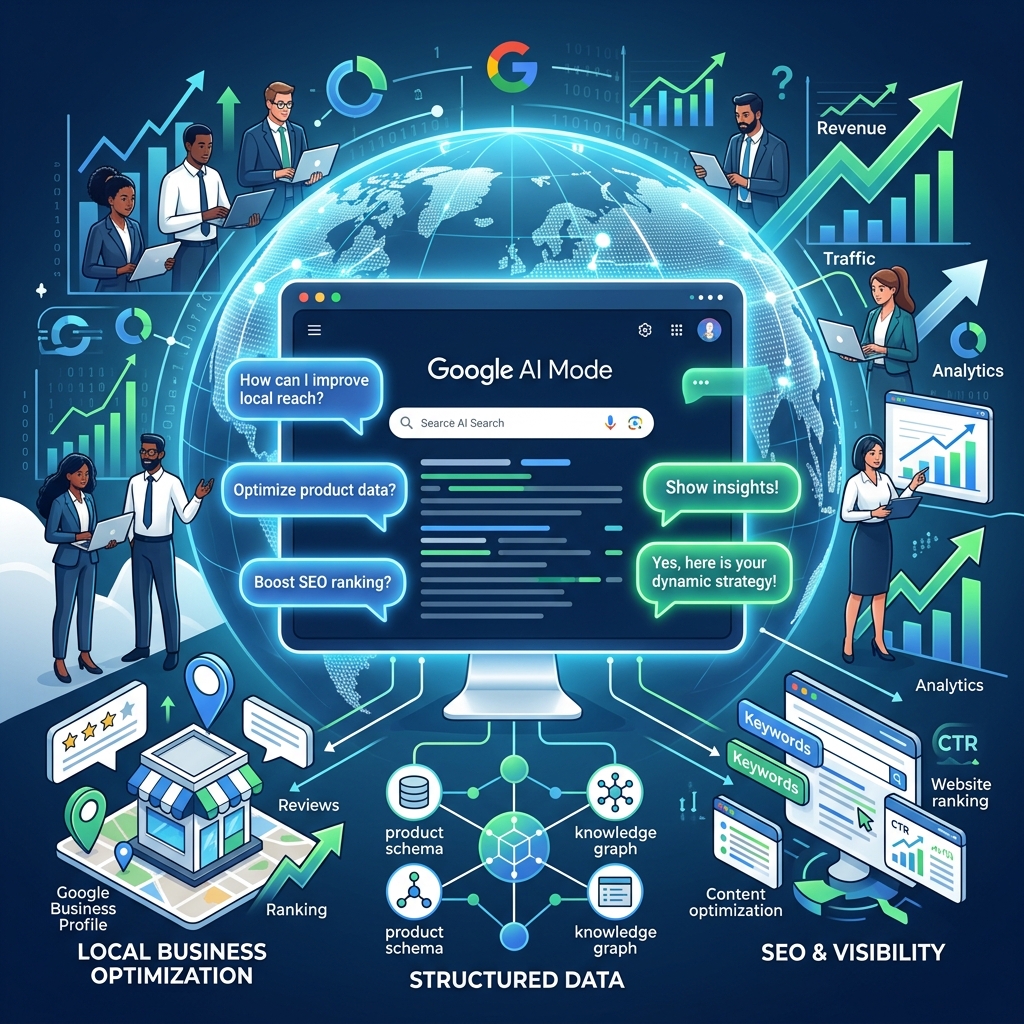
When The Weekend sang “Here We Go…Again,” he was probably not referring to Google and other online search engines (or maybe he was, who knows with The Weekend). But as a crooner from another generation declared, “The Times They Are A-Changin.” So here we go again with another massive change, this time for Google AI Mode, which will impact SEO and AEO (Answer Engine Optimization).
Google recently published an official guide to optimizing for “AI Mode,” a fully chat-based search experience that replaces the traditional list of results. Studies show that 93% of AI Mode searches end without a single click to an external website, meaning businesses that aren’t optimized for this new landscape are essentially invisible.
But there’s good news: Google has clarified that most of the hyped “AI Search hacks” aren’t necessary, but what actually matters is the same foundational SEO you already know, plus content that only you can write. And for local businesses, AI Overviews appear in only about 8% of local searches. The big takeaway is that Google Business Profile optimization and local SEO fundamentals remain a priority.
Here are some ways to get your online property ready for AI Mode.
What is Google AI Mode, and why does it matter?
Google AI Mode turns your standard search bar into a back-and-forth conversation. Instead of just getting a list of links, you can chat with Google’s Gemini AI to dig into complicated questions and get answers that actually understand your context.
What makes it different from a basic search is that it’s dynamic. You can ask follow-up questions or even use photos and voice commands to explain what you need. If you let it, the tool can even pull helpful details from your own Gmail or Maps to make the answers feel personal to you.
This is a big deal because it changes search from a “keyword hunt” into a helpful assistant. For anyone making content online, the goal is now less about gaming the system. It is more about being genuinely useful so the AI recognizes your value.
Why most small businesses are invisible to AI
A lot of small businesses are virtually invisible to AI because their digital presence is a mess. AI models like Google’s need organized, high-quality info to actually “see” a brand, but many small shops skip out on SEO or don’t bother with the technical details that help bots understand what they do.
When you add in a lack of online reviews or inconsistent info across the web, AI just doesn’t see them as an authority. As AI becomes the main way people find things, businesses have to clean up their digital act if they want to stay in the game.
Steps to Ensure Your Website Stays AI Visible
If you want your website to show up in AI search results, you need to focus on being clear, helpful, and reliable.
- Talk like a person. Write high-quality stuff that actually answers questions and proves you know your business.
- Use schema markup. It’s like giving AI a map to understand what your pages are about.
- Fix the tech basics. Make sure your site is fast, easy to use on a phone, and accessible to everyone.
- Get vouched for. Solid backlinks from other sites act like a “thumbs up” for your credibility.
- Be everywhere. Keep your social media and local listings active so your brand stays recognizable.
- Stay flexible. AI changes fast, so keep an eye on new trends and be ready to tweak your strategy.
How to Use Google AI Mode
Google AI Mode is available now in the U.S. through Google Search, and getting started is simpler than you might expect.
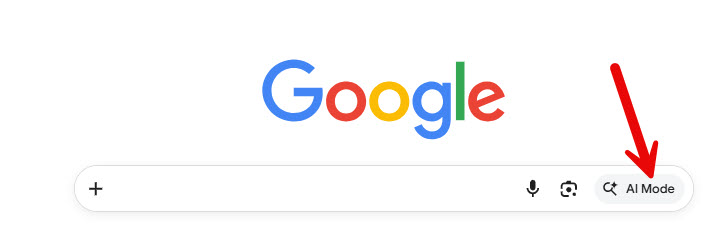
Access it through Google Search. Head to google.com and look for the “AI Mode” tab near the top of the search results page, right alongside the familiar Images, Videos, and News tabs. If you don’t see it yet, make sure you’re signed into your Google account, as the rollout is tied to logged-in users.
Start a conversation, not just a query. Instead of typing in three keywords and hoping for the best, try asking a full question the way you’d ask a knowledgeable friend. For example, rather than searching “Atlanta plumbers,” you might ask, “What should I look for when hiring a plumber for a water heater replacement in Atlanta?” AI Mode will synthesize information from across the web and give you a structured, conversational answer.
Follow up naturally. This is where AI Mode really shines. After your first answer, you can keep the conversation going. Ask “How much does that typically cost?” or “Are there any red flags to watch for?” Google remembers the context of your conversation, so you don’t have to repeat yourself.
Use voice and images when it helps. On mobile, you can tap the microphone to speak your question or use the camera to show Google something visual. It can be a product, a broken appliance, a plant you can’t identify. The AI will work with what you give it.
Enable personal context (optional). If you grant permission, AI Mode can pull relevant details from your Gmail or Google Maps history to personalize answers. For example, it might reference a local business you’ve visited before. This feature is opt-in, so you stay in control of what it accesses.
Understand what you’re getting. AI Mode is a synthesis tool, not a direct directory. It pulls from multiple sources to build its answer, which means your search results are no longer a ranked list of websites; they’re a summarized response. This is exactly why keeping your website content clear, accurate, and well-structured matters so much. If Google’s AI can’t easily read and trust your content, it won’t include your business in its answer to a potential customer.
The bottom line: using AI Mode is easy. Showing up in AI Mode takes the kind of solid digital foundation this entire article has been talking about.
With new tools like Google’s AI Mode rolling out, the way people find businesses online is shifting. To stay visible, you can’t just rely on the old tricks; you need high-quality content that a machine can easily read and humans actually want to use.
This can feel overwhelming for small business owners, but it really comes down to a few basic habits. You don’t need a massive team to keep up—just focus on solid SEO, use structured data so AI can “categorize” your site, and keep your info consistent across the web.
By taking these small steps now, you’re not just keeping your head above water; you’re setting yourself up to lead the way in this new version of search. The tools are changing, but showing up for your customers still gets the same real-world results.