

What is an FAQ page on a website?
An FAQ (Frequently Asked Questions) page is a section of a website that answers common user queries about your products, services, or processes. It is often presented in an accordion format, as seen here, because this layout really shines on mobile devices. In the emerging Answer Engine Optimization (AEO) era, the FAQ page is even more critical, as it provides concise answers favored by Artificial Intelligence (AI) search tools (ChatGPT, Google Gemini, Perplexity, Copilot).
Remember when you entered a query in Google or any search engine, and you’d get links to websites with answers? And remember when websites would fashion their content for higher search engine rankings to show up at the top of these search results? We all know this online dance as SEO (Search Engine Optimization). But AI has introduced a new dance partner, heating things up more than an Argentine Tango. Ladies and gentlemen, please welcome to the dance floor, Answer Engine Optimization, known as AEO.
What is Answer Engine Optimization (AEO)?
- For AEO, you structure and optimize online content so AI answer engines can easily understand, extract, and present it as an authoritative response to user questions.
- It aims to increase visibility of AI-generated answers on platforms such as ChatGPT, Perplexity, Google AI Overviews, and Bing Copilot, rather than ranking only in classic search results (SEO).
It is crucial to understand that AEO does not replace SEO; it evolves it. Go here for our post about understanding the difference between AEO and SEO and how they need to work in harmony.
This past year, we have seen the meteoric rise of AEO. The forecast for the upcoming year is that it will reach critical mass and become a powerful online force, so now is the time for website owners to prepare. Here are a few ways to ready your site for the AEO paradigm.
- Optimize for Featured Snippets: Short, concise answers to core questions (40-60 words)
- Leverage Structured Data: Schema markup.
- Focus on Conversational Phrases: Write as you speak, not “robot-speak” keywords.
- Updated Online Resources: An FAQ page
For now, let’s focus on the FAQ page.
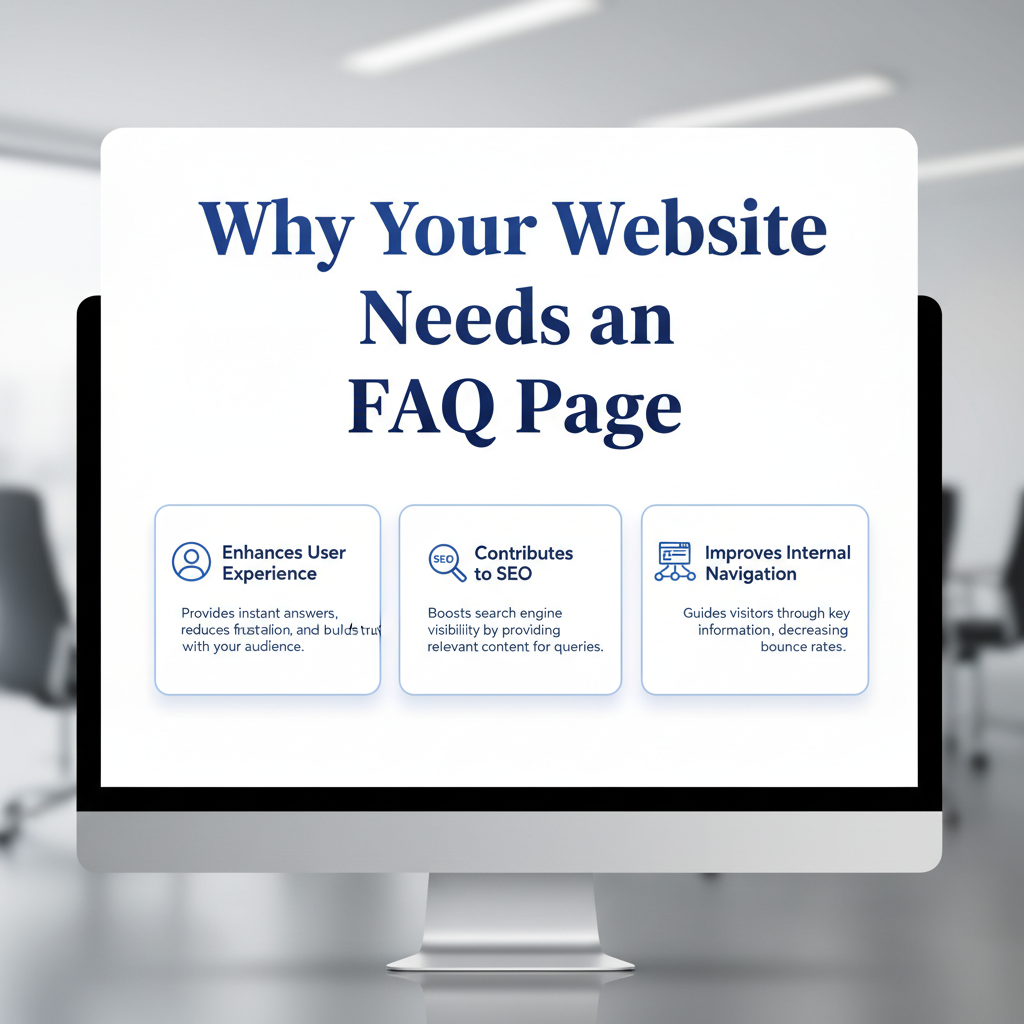
Why Your Website Needs an FAQ Page
An effective FAQ page does more than just answer questions; it improves your entire website. Here’s how:
- Enhances User Experience: By proactively answering common queries, you empower users to find information on their own time. This reduces frustration, builds trust, and increases overall satisfaction. Think of it as a dedicated, 24/7 customer service agent for your website.
- Contributes to AEO (Answer Engine Optimization): Search engines like Google are evolving into “answer engines.” They aim to provide direct answers to users’ queries. An FAQ page, structured with clear questions and concise answers, positions your content to appear in featured snippets and “People Also Ask” sections, driving highly qualified traffic to your site.
- Improves Internal Navigation: Your FAQ answers can link to relevant product pages, blog posts, or service descriptions. This guides users deeper into your site, increasing engagement and supporting their purchasing journey.
Why an Accordion Format is Ideal
To maximize the benefits of your FAQ page, we recommend using an accordion format. This is where answers are initially hidden and revealed only when a user clicks on a question. Here is an example.
User-Friendly Organization
Optimized for Search Engines
This structure also benefits SEO. The code behind an accordion helps search engines understand the question-and-answer relationship, which can improve your chances of securing those valuable featured snippet positions.
By implementing a well-structured FAQ page, you can efficiently address customer needs, improve your site’s visibility, and ultimately, drive more conversions. It’s a simple addition that offers a significant return.
If your website doesn’t have an FAQ page, it’s time to add one. If it has an FAQ section, it needs to be updated to reflect AI and AEO.